
If you've tried baking with protein powder and pulled the bake out of the oven and thought "why does this taste and feel like dry cardboard," I promise you it's not a you problem. It's a math problem.
I'm a software engineer full-time and baking with protein powder scratches the same itch as debugging does - you've got an ingredient that doesn't behave like the thing it's replacing. Skip that, and you get a bug: dry, dense, or rubbery.
So let's talk about what's actually happening in the bowl, and how I keep it from happening to you.
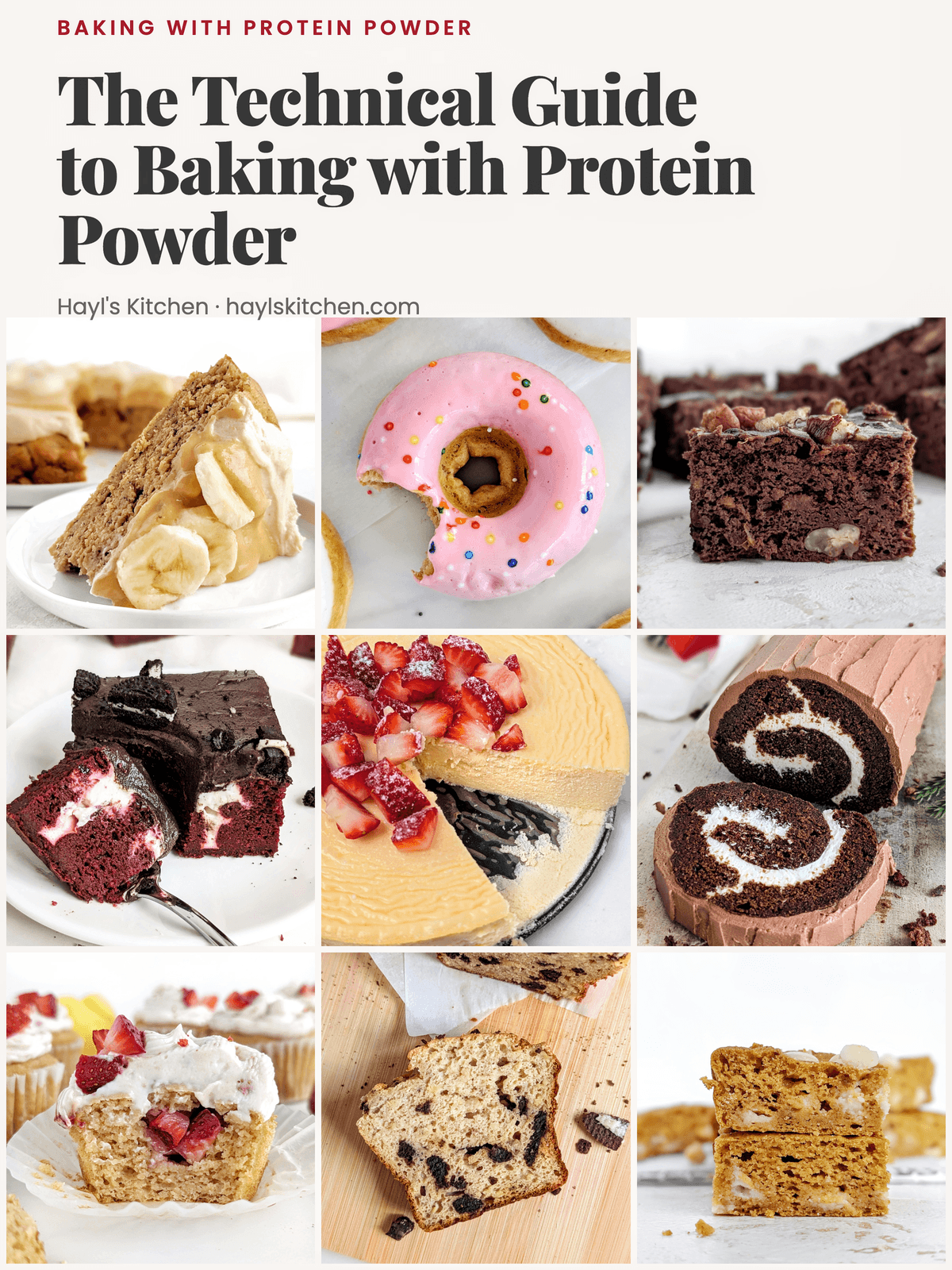
First, Let's Clear Up What Protein Powder Is Actually Replacing
Quick myth-bust before we go further: baking with protein powder isn't a 1:1 flour swap. That's where most "healthy baking" recipes go wrong and end up dry and sad.
Here's how I actually build a recipe:
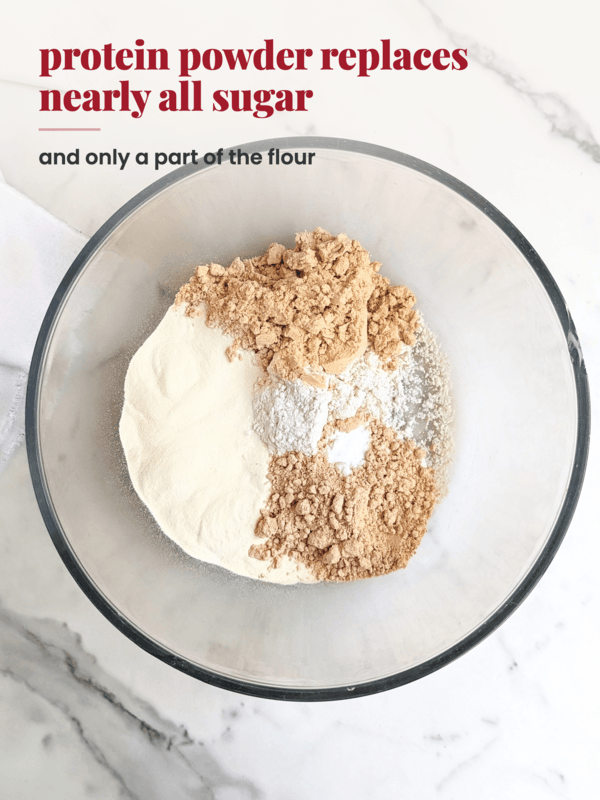
- Protein powder replaces sugar, not flour. That's its main job in my recipes.
- It also replaces a portion of the flour - usually ¼ to ⅓ of it, not all of it.
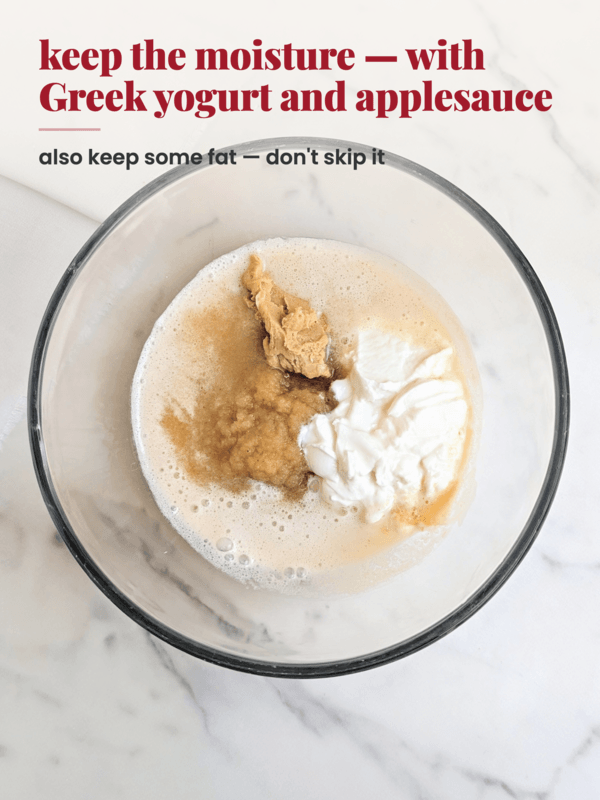
- Applesauce or yogurt makes up the moisture gap. Both add water content and a little natural sweetness, so they're doing double duty.
- Milk is not my go-to fix here. It thins the batter, but it doesn't have the clingy, gel-like texture applesauce and yogurt bring. Bakes made with milk as the moisture fix tend to dry out faster, not less.
That distinction matters, because it changes the whole troubleshooting approach below. You're not 'adding protein powder to a normal recipe'. You're rebalancing a recipe that lost both its sugar and some of its flour. Two structural holes, not one.
The Mathematics of Moisture: Protein Powder Dries Everything Out
Why It Happens:
Protein isolates and concentrates are dehydrated and very absorbent. They'll soak up several times their weight in liquid. Unlike sugar or flour, protein powder brings zero starch to trap that moisture and zero gluten to give the bake structure. It pulls liquid out of your batter while holding nothing in
There's a second issue: heat. Protein tightens up (denatures) as it bakes. Too much protein relative to fat and liquid, and that tightening shows up as the rubbery texture everyone complains about.
How to Fix It:
- Protein powder for all sugar or maple syrup or honey
- Keep protein powder to replace ¼-1/3 of your total flour, max, unless a recipe is purpose-built for more.
- For the moisture you lose, go for applesauce or yogurt first - not milk.
- Fat source (nut butter, oil, avocado) is needed; this is is moisture insurance that doesn't bake off the way water does. My recipes only ask for a little, so don't skip it to save calories; you almost always need some fat for a baked good. If you want a high protein nut butter, American Dream nutter butter (code HAYLSKITCHEN for a discount) is the one I recommend!
One of my readers learned this the hard way. She swapped soy protein isolate into a brownie recipe and it came out 'alright, but very dry.' That's the isolate soaking up liquid the recipe wasn't built to replace.
Protein Powder Types, At a Glance
Not all protein powders bake the same. Grabbing whatever's in your pantry is a fast way to end up with something that 'doesn't look like the picture.' Here's the quick-reference version:
| Protein Type | Baking Property | Best For... | Technical Note |
|---|---|---|---|
| Whey Isolate | Acts like egg whites - coagulates fast when heated | Pancakes, waffles, light cakes | Dries out quickly and browns fast; watch your bake time closely |
| Casein | Hydrophilic - forms a thick, gel-like consistency | Puddings, moist breads, dense brownies | Holds onto moisture best for a soft crumb; behaves a lot like coconut flour |
| Plant-Based | Highly absorbent and dense | Chewy cookies, puddings, energy bites, pancakes, oats | Earthier flavor, needs extra liquid and some flavor matching (vanilla, cocoa, cinnamon); unflavored versions sub in cleanly for part of your flour |
| Whey/Casein Blend (my go-to) | The "hybrid" advantage | Pretty much everything | Combines whey's lift with casein's moisture - the most forgiving option if you only want to stock one tub |
There are more protein powder types than I could fit in one table - collagen, egg white protein, beef isolate, and blends within blends. I'm working on a full post comparing them side by side. Keep an eye out for that one.
For a quick note - I always recommend Quest Nutrition vanilla protein and also the chocolate protein from Quest.
Precision Measurements: Grams Beat Cups, Every Time
"Cups" aren't really a unit of measurement, they're a unit of vibes lol.
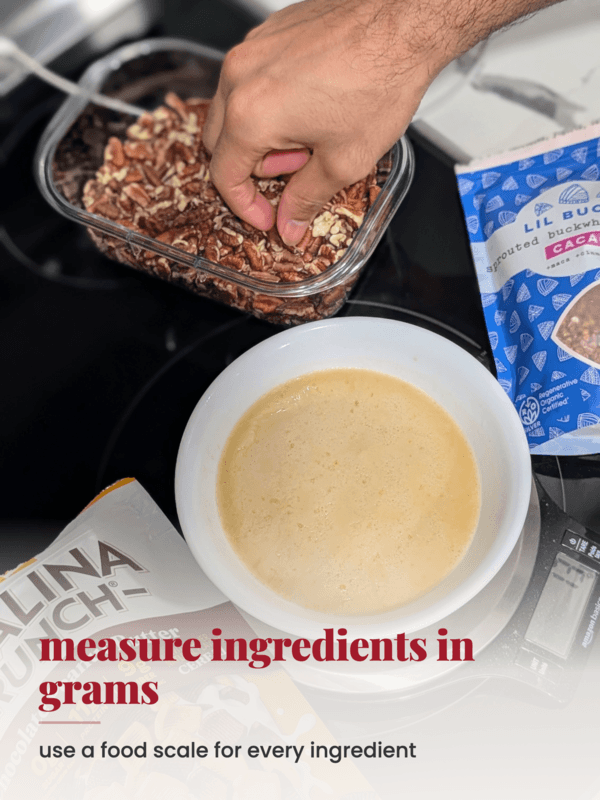
A packed cup of protein powder versus a sifted, aerated cup from the same tub can differ 20-30% in weight. With an ingredient this sensitive to ratio, that swing is the difference between a great bake and a dry brick. Use a kitchen food scale!
A kitchen scale removes the guesswork:
- Weigh your ingredients - protein powder, flour, and liquid sweeteners (honey, maple syrup) - these vary the most by brand and packing.
- Swapping protein powder brands? Match protein powders by weight, not by scoop. Scoop sizes aren't standardized across brands.
- Track what your full batch weighs so you can divide it into truly even servings - this is the only way "22g protein per slice" actually means something.
Readers who weigh things out consistently report numbers that hold up. One calculated 165 kcal and 22g protein per slice after splitting her batch into two pans. Readers eyeballing it into 'vaguely similar' pieces just get vaguely similar macros.
Troubleshooting: Dense, Rubbery, or Dry Results when Baking with Protein Powder
Here's the debugging table I wish existed when I started doing this.
| Symptom | Likely Cause | Fix |
|---|---|---|
| Dry, crumbly texture | Too much protein powder relative to moisture; overbaked | Add applesauce or yogurt, not milk; pull it a few minutes early and check for moist crumbs, not a clean toothpick |
| Rubbery or bouncy texture | Protein overdenatured from overbaking or high heat; not enough fat | Lower the oven temp slightly and check early; add more fat, not more liquid - fat coats protein and keeps it from toughening |
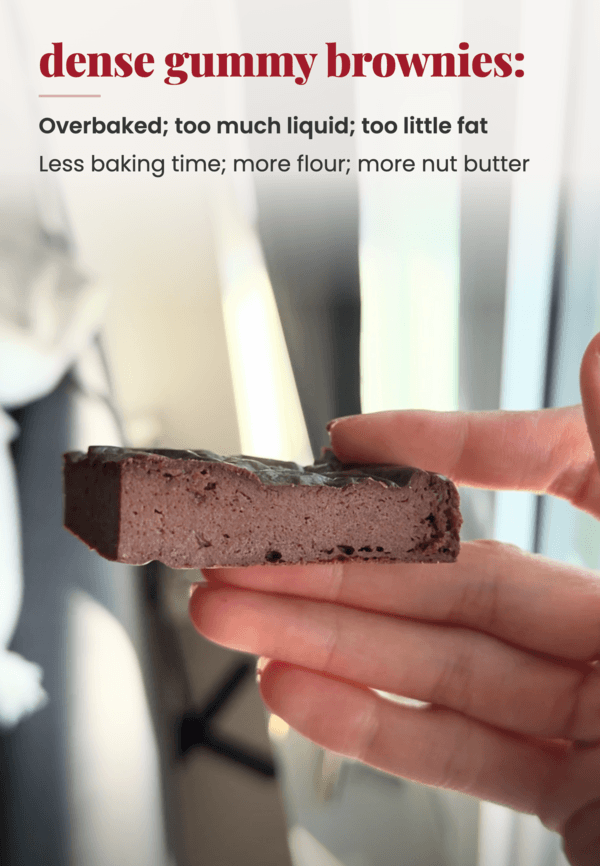
| Dense, gummy center (especially for brownies!) | Overbaked; too much liquid without enough structure to support it; not enough fat | Reduce the baking time slightly; add a tablespoon of coconut flour for structure; add melted butter or nut butter |
| Eggy or spongy texture | Too much egg white relative to other liquid | Cut egg whites slightly, replace that volume with yogurt to keep total liquid the same |
| Batter won't come together | Protein powder soaked up liquid faster than expected while mixing | Add applesauce or yogurt a tablespoon at a time until it hits the right consistency |
| Falls apart, won't hold shape | Not enough binding fat/egg; too much protein powder replacing structural flour | Reduce protein powder back to the ¼–⅓ flour range, or even further; add an extra egg white or spoonful of nut butter for binding |
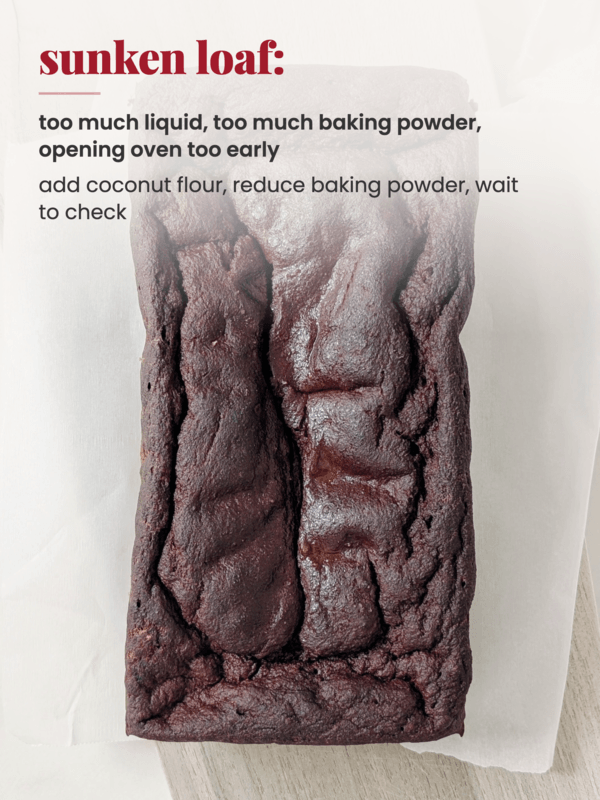
| Loaf sinks after cooling | Too much moisture; too much baking powder; opening the oven too early | Add more flour or tablespoon of coconut flour, reduce the baking powder and wait until at least 5-7 minutes before the recommended baking time to check for done-ness. |
What My Readers' Comments Actually Prove
I could just tell you my recipes work, but better proof is the readers who've tried and tested my recipes and reported back - real hands-on evidence, not just me asserting expertise:
- A reader who swapped in soy protein isolate on a brownie recipe found it came out "very dry" - confirming isolates need a liquid adjustment when subbed in.
- A reader troubleshooting a too-eggy air fryer brownie planned to cut her egg whites and add unsweetened almond milk instead, to keep the total liquid the same while changing where it came from.
- A reader working with pea protein in my carrot cake protein loaf recipe reduced it by weight (30g instead of a full scoop) and added flaxseed meal to compensate - she couldn't taste the pea protein at all.
- Multiple readers (like on in this protein mud cake recipe) have shared exact per-slice macro math in the comments, which only works because they weighed the batch instead of eyeballing it.
That's real-world data from hundreds of readers' kitchens confirming the same underlying chemistry - not just mine.
The Bottom Line
Baking with protein powder isn't a flour swap, and it isn't a 1:1 anything. It replaces your sugar, a fraction of your flour, and asks you to fix the moisture gap with applesauce or yogurt instead of milk. Once you understand what it's doing in the bowl, you can control for it instead of guessing. That's how you get real baked desserts that are actually good, not just 'good for healthy'.